Elon musk, p.1
Elon Musk, page 1


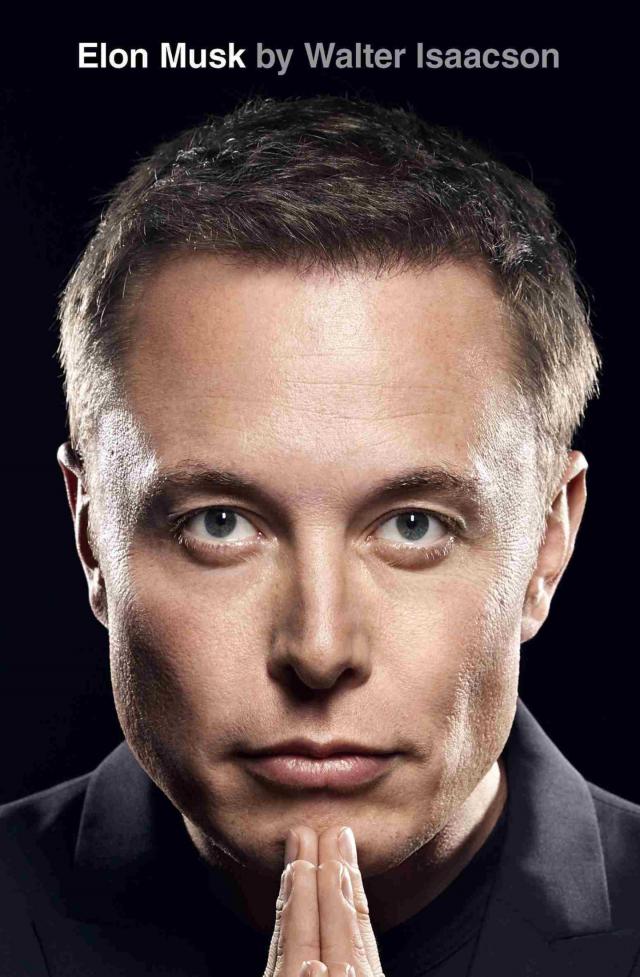
Thank you for downloading this Simon & Schuster ebook.
Get a FREE ebook when you join our mailing list. Plus, get updates on new releases, deals, recommended reads, and more from Simon & Schuster. Click below to sign up and see terms and conditions.
CLICK HERE TO SIGN UP
Already a subscriber? Provide your email again so we can register this ebook and send you more of what you like to read. You will continue to receive exclusive offers in your inbox.
To anyone I’ve offended, I just want to say, I reinvented electric cars and I’m sending people to Mars in a rocket ship. Did you think I was also going to be a chill, normal dude?
—Elon Musk, Saturday Night Live, May 8, 2021
The people who are crazy enough to think they can change the world are the ones who do.
—Steve Jobs
PROLOGUE
Muse of Fire
The playground
As a kid growing up in South Africa, Elon Musk knew pain and learned how to survive it.
When he was twelve, he was taken by bus to a wilderness survival camp, known as a veldskool. “It was a paramilitary Lord of the Flies,” he recalls. The kids were each given small rations of food and water, and they were allowed—indeed encouraged—to fight over them. “Bullying was considered a virtue,” his younger brother Kimbal says. The big kids quickly learned to punch the little ones in the face and take their stuff. Elon, who was small and emotionally awkward, got beaten up twice. He would end up losing ten pounds.
Near the end of the first week, the boys were divided into two groups and told to attack each other. “It was so insane, mind-blowing,” Musk recalls. Every few years, one of the kids would die. The counselors would recount such stories as warnings. “Don’t be stupid like that dumb fuck who died last year,” they would say. “Don’t be the weak dumb fuck.”
The second time Elon went to veldskool, he was about to turn sixteen. He had gotten much bigger, bursting up to six feet with a bearlike frame, and had learned some judo. So veldskool wasn’t so bad. “I realized by then that if someone bullied me, I could punch them very hard in the nose, and then they wouldn’t bully me again. They might beat the shit out of me, but if I had punched them hard in the nose, they wouldn’t come after me again.”
* * *
South Africa in the 1980s was a violent place, with machine-gun attacks and knife killings common. Once, when Elon and Kimbal got off a train on their way to an anti-apartheid music concert, they had to wade through a pool of blood next to a dead person with a knife still sticking out of his brain. For the rest of the evening, the blood on the soles of their sneakers made a sticky sound against the pavement.
The Musk family kept German Shepherd dogs that were trained to attack anyone running by the house. When he was six, Elon was racing down the driveway and his favorite dog attacked him, taking a massive bite out of his back. In the emergency room, when they were preparing to stitch him up, he resisted being treated until he was promised that the dog would not be punished. “You’re not going to kill him, are you?” Elon asked. They swore that they wouldn’t. In recounting the story, Musk pauses and stares vacantly for a very long time. “Then they damn well shot the dog dead.”
His most searing experiences came at school. For a long time, he was the youngest and smallest student in his class. He had trouble picking up social cues. Empathy did not come naturally, and he had neither the desire nor the instinct to be ingratiating. As a result, he was regularly picked on by bullies, who would come up and punch him in the face. “If you have never been punched in the nose, you have no idea how it affects you the rest of your life,” he says.
At assembly one morning, a student who was horsing around with a gang of friends bumped into him. Elon pushed him back. Words were exchanged. The boy and his friends hunted Elon down at recess and found him eating a sandwich. They came up from behind, kicked him in the head, and pushed him down a set of concrete steps. “They sat on him and just kept beating the shit out of him and kicking him in the head,” says Kimbal, who had been sitting with him. “When they got finished, I couldn’t even recognize his face. It was such a swollen ball of flesh that you could barely see his eyes.” He was taken to the hospital and was out of school for a week. Decades later, he was still getting corrective surgery to try to fix the tissues inside his nose.
But those scars were minor compared to the emotional ones inflicted by his father, Errol Musk, an engineer, rogue, and charismatic fantasist who to this day bedevils Elon. After the school fight, Errol sided with the kid who pummeled Elon’s face. “The boy had just lost his father to suicide, and Elon had called him stupid,” Errol says. “Elon had this tendency to call people stupid. How could I possibly blame that child?”
When Elon finally came home from the hospital, his father berated him. “I had to stand for an hour as he yelled at me and called me an idiot and told me that I was just worthless,” Elon recalls. Kimbal, who had to watch the tirade, says it was the worst memory of his life. “My father just lost it, went ballistic, as he often did. He had zero compassion.”
Both Elon and Kimbal, who no longer speak to their father, say his claim that Elon provoked the attack is unhinged and that the perpetrator ended up being sent to juvenile prison for it. They say their father is a volatile fabulist, regularly spinning tales that are larded with fantasies, sometimes calculated and at other times delusional. He has a Jekyll-and-Hyde nature, they say. One minute he would be friendly, the next he would launch into an hour or more of unrelenting abuse. He would end every tirade by telling Elon how pathetic he was. Elon would just have to stand there, not allowed to leave. “It was mental torture,” Elon says, pausing for a long time and choking up slightly. “He sure knew how to make anything terrible.”
When I call Errol, he talks to me for almost three hours and then follows up regularly with calls and texts over the next two years. He is eager to describe and send me photos of the nice things he provided to his kids, at least during the periods when his engineering business was doing well. At one point he drove a Rolls-Royce, built a wilderness lodge with his boys, and got raw emeralds from a mine owner in Zambia, until that business collapsed.
But he admits that he encouraged a physical and emotional toughness. “Their experiences with me would have made veldskool quite tame,” he says, adding that violence was simply part of the learning experience in South Africa. “Two held you down while another pummeled your face with a log and so on. New boys were forced to fight the school thug on their first day at a new school.” He proudly concedes that he exercised “an extremely stern streetwise autocracy” with his boys. Then he makes a point of adding, “Elon would later apply that same stern autocracy to himself and others.”
“Adversity shaped me”
“Someone once said that every man is trying to live up to his father’s expectations or make up for his father’s mistakes,” Barack Obama wrote in his memoirs, “and I suppose that may explain my particular malady.” In Elon Musk’s case, his father’s impact on his psyche would linger, despite many attempts to banish him, both physically and psychologically. Elon’s moods would cycle through light and dark, intense and goofy, detached and emotional, with occasional plunges into what those around him dreaded as “demon mode.” Unlike his father, he would be caring with his kids, but in other ways, his behavior would hint at a danger that needed to be constantly battled: the specter that, as his mother put it, “he might become his father.” It’s one of the most resonant tropes in mythology. To what extent does the epic quest of the Star Wars hero require exorcising demons bequeathed by Darth Vader and wrestling with the dark side of the Force?
“With a childhood like his in South Africa, I think you have to shut yourself down emotionally in some ways,” says his first wife Justine, the mother of five of his surviving ten children. “If your father is always calling you a moron and idiot, maybe the only response is to turn off anything inside that would’ve opened up an emotional dimension that he didn’t have tools to deal with.” This emotional shutoff valve could make him callous, but it also made him a risk-seeking innovator. “He learned to shut down fear,” she says. “If you turn off fear, then maybe you have to turn off other things, like joy or empathy.”
The PTSD from his childhood also instilled in him an aversion to contentment. “I just don’t think he knows how to savor success and smell the flowers,” says Claire Boucher, the artist known as Grimes, who is the mother of three of his other children. “I think he got conditioned in childhood that life is pain.” Musk agrees. “Adversity shaped me,” he says. “My pain threshold became very high.”
During a particularly hellish period of his life in 2008, after the first three launches of his SpaceX rockets exploded and Tesla was about to go bankrupt, he would wake up thrashing and recount to Talulah Riley, who became his second wife, the horrendous things his father had once said. “I’d heard him use those phrases himself,” she says. “It had a profound effect on how he operates.” When he recalled these memories, he would zone out and seem to disappear behind his steel-colored eyes. “I think he wasn’t conscious of how that still affected him, because he thought of it as something in his childhood,” Riley says. “But he’s retained a childlike, almost stunted side. Inside the man, he’s still there as a child, a child standing in front of his dad.”
Out of this cauldron, Musk developed an aura that made him seem, at times, like an alien, as if his Mars mission were an aspiration to return home and his desire to build humanoid robots were a quest for kinship. You’
He developed a fervor that cloaked his goofiness, and a goofiness that cloaked his fervor. Slightly uncomfortable in his own body, like a big man who was never an athlete, he would walk with the stride of a mission-driven bear and dance jigs that seemed taught by a robot. With the conviction of a prophet, he would speak about the need to nurture the flame of human consciousness, fathom the universe, and save our planet. At first I thought this was mainly role-playing, the team-boosting pep talks and podcast fantasies of a man-child who had read The Hitchhiker’s Guide to the Galaxy once too often. But the more I encountered it, the more I came to believe that his sense of mission was part of what drove him. While other entrepreneurs struggled to develop a worldview, he developed a cosmic view.
His heritage and breeding, along with the hardwiring of his brain, made him at times callous and impulsive. It also led to an exceedingly high tolerance for risk. He could calculate it coldly and also embrace it feverishly. “Elon wants risk for its own sake,” says Peter Thiel, who became his partner in the early days of PayPal. “He seems to enjoy it, indeed at times be addicted to it.”
He became one of those people who feels most alive when a hurricane is coming. “I was born for a storm, and a calm does not suit me,” Andrew Jackson once said. Likewise with Musk. He developed a siege mentality that included an attraction, sometimes a craving, for storm and drama, both at work and in the romantic relationships he struggled and failed to maintain. He thrived on crises, deadlines, and wild surges of work. When he faced tortuous challenges, the strain would often keep him awake at night and make him vomit. But it also energized him. “He is a drama magnet,” says Kimbal. “That’s his compulsion, the theme of his life.”
* * *
When I was reporting on Steve Jobs, his partner Steve Wozniak said that the big question to ask was Did he have to be so mean? So rough and cruel? So drama-addicted? When I turned the question back to Woz at the end of my reporting, he said that if he had run Apple, he would have been kinder. He would have treated everyone there like family and not summarily fired people. Then he paused and added, “But if I had run Apple, we may never have made the Macintosh.” And thus the question about Elon Musk: Could he have been more chill and still be the one launching us toward Mars and an electric-vehicle future?
At the beginning of 2022—after a year marked by SpaceX making thirty-one successful rocket launches, Tesla selling close to a million cars, and him becoming the richest man on Earth—Musk spoke ruefully about his compulsion to stir up dramas. “I need to shift my mindset away from being in crisis mode,” he told me, “which it has been in for about fourteen years now, or arguably most of my life.”
It was a wistful comment, not a New Year’s resolution. Even as he made the pledge, he was secretly buying up shares of Twitter, the world’s ultimate playground. That April, he snuck away to the Hawaiian house of his mentor Larry Ellison, founder of Oracle, accompanied by the actress Natasha Bassett, an occasional girlfriend. He had been offered a board seat at Twitter, but over the weekend he concluded that wasn’t enough. It was in his nature to want total control. So he decided he would make a hostile bid to buy the company outright. Then he flew to Vancouver to meet Grimes. There he stayed up with her until 5 a.m. playing a new war-and-empire-building game, Elden Ring. Right after he finished, he pulled the trigger on his plan and went on Twitter. “I made an offer,” he announced.
Over the years, whenever he was in a dark place or felt threatened, it took him back to the horrors of being bullied on the playground. Now he had the chance to own the playground.
1 Adventurers
Winnifred and Joshua Haldeman
Errol, Maye, Elon, Tosca, and Kimbal Musk
Cora and Walter Musk
Joshua and Winnifred Haldeman
Elon Musk’s attraction to risk was a family trait. In that regard, he took after his maternal grandfather, Joshua Haldeman, a daredevil adventurer with strongly held opinions who was raised on a farm on the barren plains of central Canada. He studied chiropractic techniques in Iowa, then returned to his hometown near Moose Jaw, where he broke in horses and gave chiropractic adjustments in exchange for food and lodging.
He was eventually able to buy his own farm, but he lost it during the depression of the 1930s. For the next few years, he worked as a cowboy, rodeo performer, and construction hand. His one constant was a love for adventure. He married and divorced, traveled as a hobo on freight trains, and was a stowaway on an oceangoing ship.
The loss of his farm instilled in him a populism, and he became active in a movement known as the Social Credit Party, which advocated giving citizens free credit notes they could use like currency. The movement had a conservative fundamentalist streak tinged with anti-Semitism. Its first leader in Canada decried a “perversion of cultural ideals” because “a disproportionate number of Jews occupy positions of control.” Haldeman rose to become chair of the party’s national council.
He also enlisted in a movement called Technocracy, which believed that government should be run by technocrats rather than politicians. It was temporarily outlawed in Canada because of its opposition to the country’s entry into World War II. Haldeman defied the ban by taking out a newspaper ad supporting the movement.
At one point he wanted to learn ballroom dancing, which is how he met Winnifred Fletcher, whose adventurous streak was equal to his. As a sixteen-year-old, she got a job at the Moose Jaw Times Herald, but she dreamed of being a dancer and actress. So she lit out by train to Chicago and then New York City. Upon her return, she opened a dance school in Moose Jaw, which is where Haldeman showed up for lessons. When he asked her to dinner, she replied, “I don’t date my clients.” So he quit the class and asked her out again. A few months later, he asked, “When will you marry me?” She responded, “Tomorrow.”
They had four children, including twin girls, Maye and Kaye, born in 1948. One day on a trip he spotted a For Sale sign on a single-engine Luscombe airplane sitting in a farmer’s field. He had no cash, but he convinced the farmer to take his car in exchange. It was rather impetuous, since Haldeman did not know how to fly. He hired someone to fly him home and teach him how to pilot the plane.
The family came to be known as The Flying Haldemans, and he was described by a chiropractic trade journal as “perhaps the most remarkable figure in the history of flying chiropractors,” a rather narrow, albeit accurate, accolade. They bought a larger single-engine plane, a Bellanca, when Maye and Kaye were three months old, and the toddlers became known as “the flying twins.”
With his quirky conservative populist views, Haldeman came to believe that the Canadian government was usurping too much control over the lives of individuals and that the country had gone soft. So in 1950, he decided to move to South Africa, which was still ruled by a white apartheid regime. They took apart the Bellanca, crated it, and boarded a freighter for Cape Town. Haldeman decided he wanted to live inland, so they took off toward Johannesburg, where most of the white citizens spoke English rather than Afrikaans. But as they flew over nearby Pretoria, the lavender jacaranda flowers were in bloom, and Haldeman announced, “This is where we’ll stay.”
When Joshua and Winnifred were young, a charlatan named William Hunt, known (at least to himself) as “the Great Farini,” came to Moose Jaw and told tales of an ancient “lost city” he had seen when crossing the Kalahari Desert in South Africa. “This fabulist showed my grandfather pictures that were obviously fake, but he became a believer and decided it was his mission to rediscover it,” Musk says. Once in Africa, the Haldemans made a monthlong trek into the Kalahari every year to search for this legendary city. They hunted for their own food and slept with their guns so they could fend off lions.